A team of agents that stays on
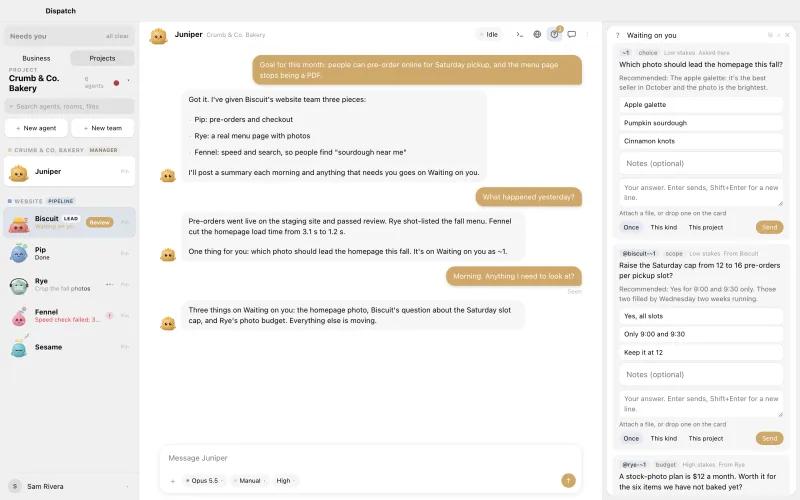
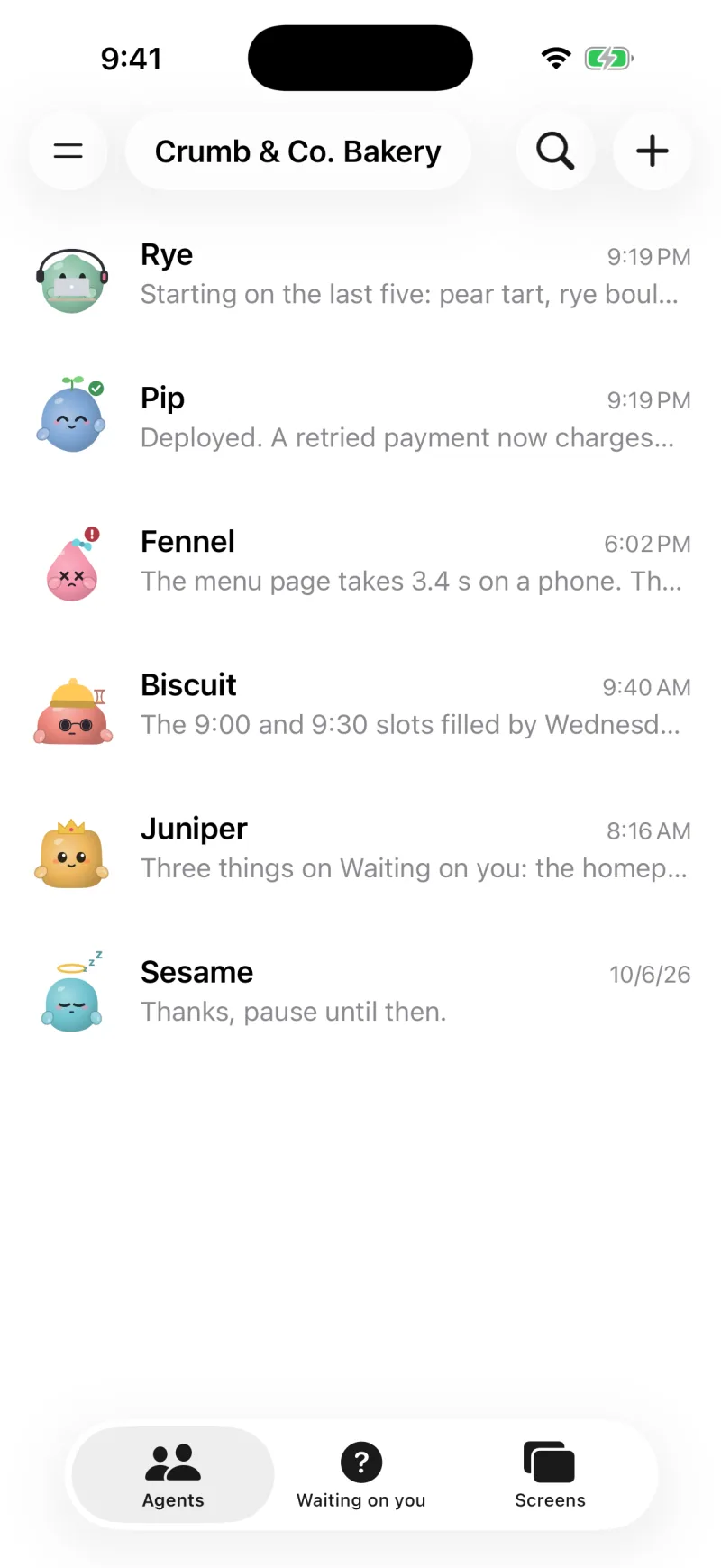
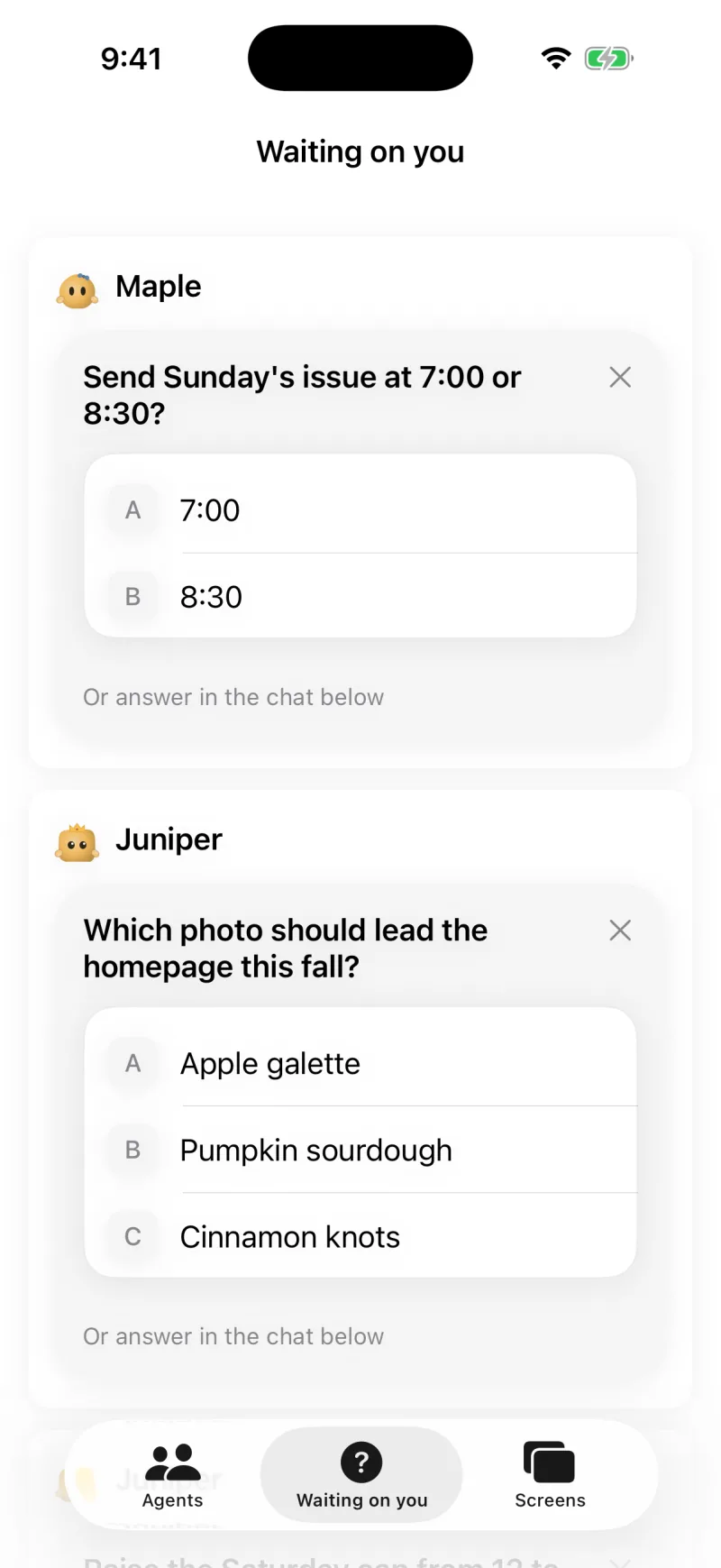
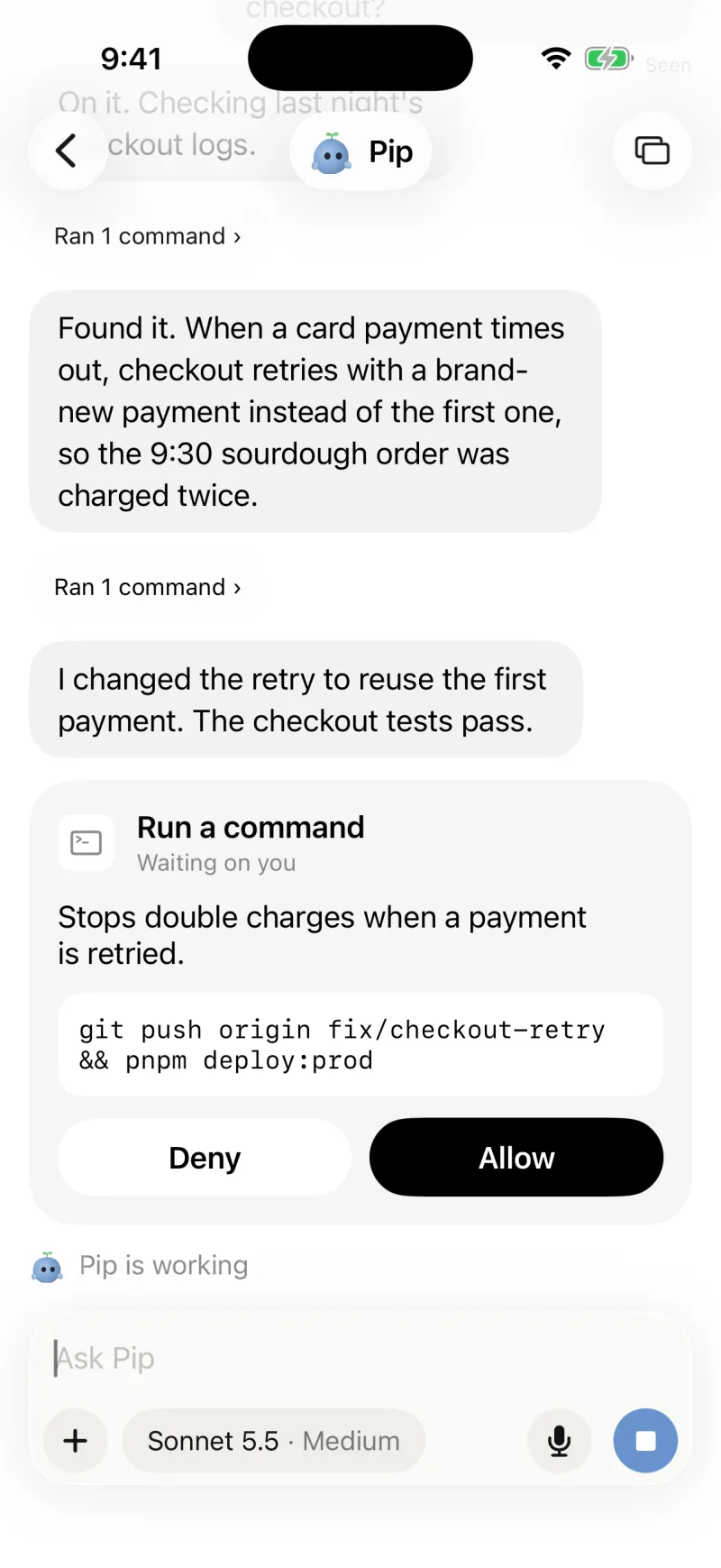
Dispatch is how I run a team of always-on agents. I chat with each one like a teammate, from a Mac app called Studio or from a native iPhone app. Routines run on their own, and when something needs me it lands on a waiting-on-you board.
- Role
- Product, specs, and review
- When
- September 8, 2026 to now
- Built with
- TypeScript, Node, SQLite, Swift, Electron, Claude Agent SDK
- Commits
- 1,771 in 30 days, Sept 8 to Oct 7
Try it
How it works
Reproduce, then prove the fix
original
reportFAILCONDITIONALPASSBack to the fix
A TrackR beta bug
The card stopped taking taps after you logged a ride. The verifier tried five ways to close it.
Only swiping worked. Three paths were still dead, and one hadn't been retested.
A second fault was a flag set too early, which locked the card.
Only then did it count as fixed.
Details
What a day looks like
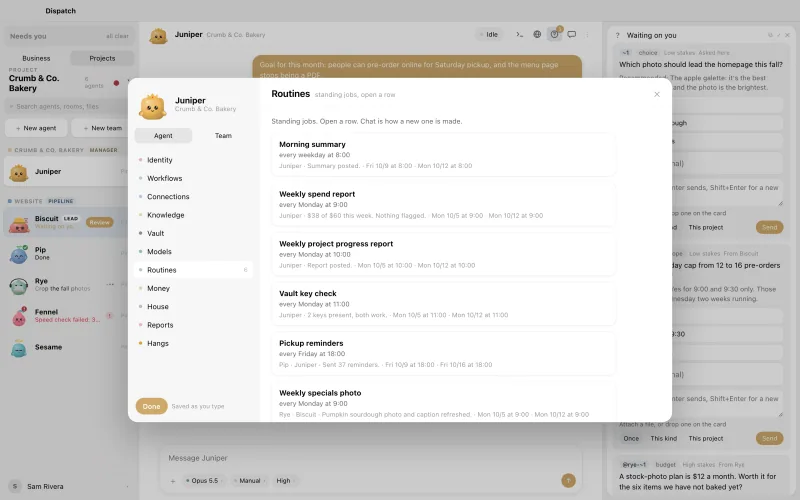
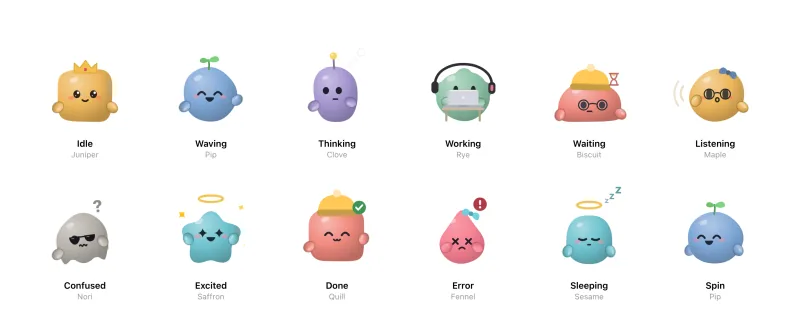
I talk to a team the way I'd talk to people, in a thread. Each agent has a blob mascot, and its mood shows what it's doing: working, waiting, done, error, or sleeping. Memory carries across days, so I'm not re-explaining the project every morning. Routines run on a schedule without me. Questions that need me show up on the waiting-on-you board, and I can answer from the iPhone app. Studio on the Mac speaks the same protocol.
Reproduce, then prove the fix
One agent reproduces a bug. Another fixes it. A separate one proves the fix by running the original report again, before it reads the fix notes. On a TrackR beta bug, the card stopped taking taps after you logged a ride. The verifier tried five ways to close it. Only swiping worked. Three paths were still dead, and one hadn't been retested, so the verdict was conditional, not pass. A second fault was a flag set too early, which locked the card. Two builds later all five paths passed. Only then did it count as fixed.
Fix what let it through
One night a builder cleared a stuck test by killing every process that matched a pattern. That included the reviewer's session, and eight hours of overnight work never ran. Now a test fails the build if anyone kills by pattern, and a watchdog with no model in it restarts stopped work. Another time my screen filled with 232 delivery errors that a fix had already solved. The running engine was older than the fix, and nothing compared the two. Now the engine reports when it's stale.
Evals that have to fail
15 eval cases run on real models. I don't trust one until it fails on the buggy code and passes on the fix. The first test for a queue bug passed on the broken code, because a steady queue never hit the failing branch. The rewrite adds agents while the queue drains. That version fails on the old code, which is what I wanted.
Want to build together?
I'm looking for a full-time team doing AI automation and agentic engineering. Email is the fastest way to reach me.